
The Business Owner’s Guide to Commercial Property in Louisville KY: Navigating 2026 Trends
![[HERO] The Business Owner’s Guide to Commercial Property in Louisville KY: Navigating 2026 Trends](/images/blog-article-01-01.webp)
2026 snapshot: what’s shaping Louisville commercial property decisions
2026 planning in Louisville commercial property centers on three pressures: financing costs, sector-by-sector performance gaps, and a development pipeline that will influence pricing power through late 2026.
Key market signals (current 2026 reporting highlights):
- Multifamily: ~95,443 completed units, 24,589 units in the pipeline, 4,447 under construction; 94–95% occupancy; $1,264 average advertised rent, 0.6% YoY; 3,667 units absorbed in the last 12 months (up from 2,590 prior year).
- Office (Q1 2026): 38,374 SF in new deals, improving year over year.
- Industrial (Q1 2026): ~1.0M SF of new leasing activity, slower than late 2025.
Practical implication for owner-users: opportunities are increasingly tied to operational fit (layout, access, power, parking, loading) and cost of capital rather than headline “hot market” narratives. Pricing disconnects remain common between seller expectations and owner-user underwriting.
Owner-user advantage in 2026: control, cost predictability, and optionality
Owner-user commercial acquisition remains a primary 2026 wealth and business continuity strategy because it can replace escalating occupancy costs with a controllable asset.
Owner-user benefits that matter most in Louisville:
- Long-term occupancy stability with fewer renewal shocks.
- Facility customization (workflow, equipment, client experience).
- Balance-sheet optionality (leaseback later, expansion, refinance, partial disposition).
- Location defensibility near workforce and customers.
Common owner-user friction points in 2026:
- Higher debt service sensitivity and tighter underwriting.
- Longer diligence timelines for older buildings (roof, HVAC, environmental, ADA).
- Greater scrutiny of tenant credit when buying multi-tenant property to occupy a portion.
Use-case fit:
- Industrial/flex: trades, light manufacturing, distribution, service businesses.
- Office/medical: professional services, healthcare, specialty clinics.
- Retail/service: destination services with predictable parking/access needs.
Louisville sector trends that impact owner-users
Industrial + flex: still the operational workhorse
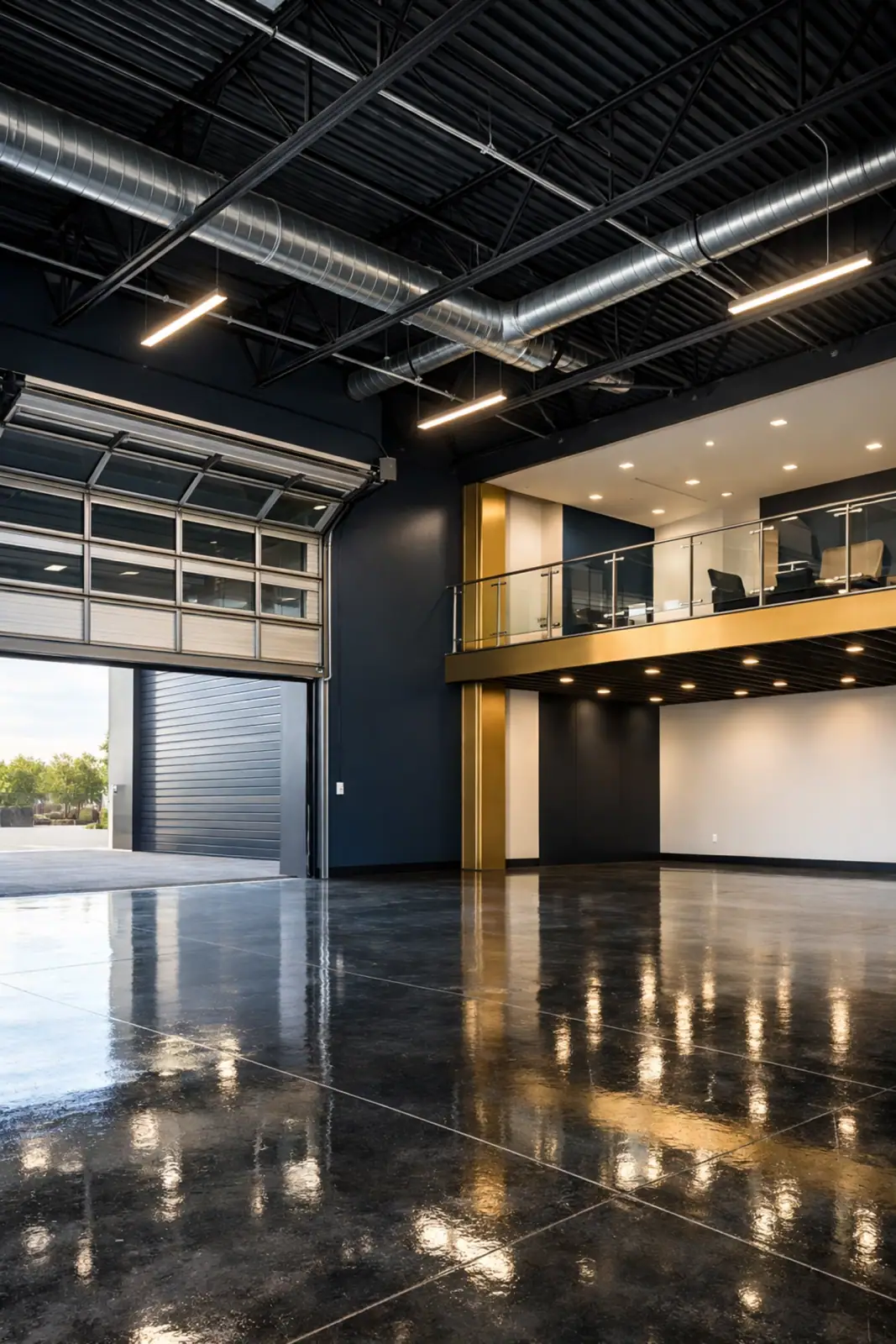
Industrial demand slowed in early 2026 versus late 2025, but functional industrial and flex buildings remain favored for owner-users because they support multiple operational models (warehouse + showroom + office).
Owner-user watchlist:
- Ceiling height, column spacing, and dock/drive-in mix.
- Power capacity and three-phase availability where required.
- Truck circulation and trailer storage constraints near urban infill.
- Zoning and permitted use verification early.
Where opportunity shows up in 2026:
- “Good bones” flex buildings where cosmetic and systems upgrades create immediate utility.
- Small-bay industrial where investor demand has softened relative to peak competition.
Office: selective stabilization, flight to functionality
Q1 2026 office leasing improved year over year, but performance remains uneven. For owner-users, the story is less about broad office recovery and more about right-sizing and function-first design.
Owner-user office criteria that drive value:
- Parking ratio and ease of access (client-facing businesses).
- Efficient floor plates that reduce wasted square footage.
- HVAC zoning and operating cost transparency.
- Ability to sublease excess space for cost offset.
Practical approach:
- Target buildings where space can be partially occupied and partially leased with simple demising.
- Avoid complex repositioning unless capital reserves are established for extended lease-up.
Multifamily: stable occupancy, muted rent growth, late-2026 setup
Multifamily in Louisville shows high occupancy (94–95%) and strong absorption (3,667 units in the past year), but rent growth remains modest (0.6% YoY) amid meaningful supply additions (pipeline and active construction).
Owner-user relevance:
- For business owners seeking a hybrid strategy (operate the business + hold income property), multifamily remains a stability play rather than a rapid-rent-growth bet in early/mid-2026.
- Expect concessions and competitive lease terms in submarkets with heavier deliveries.
- Underwriting should stress-test flat-to-low growth rent assumptions through 2026, with upside potential if supply moderates later in the year.
Key diligence focus:
- Insurance, property taxes, and utility cost trends.
- Unit turn/renovation scope realism and contractor availability.
Retail and service corridors: convenience + experience
Retail dynamics in 2026 reward convenience retail and service-forward concepts. New store announcements and mixed-use plans signal continued emphasis on daily needs and experiential nodes.
Owner-user angle:
- For service businesses, the best “retail” assets function as visibility + access platforms: signage, parking, and ingress/egress.
- For specialty users (fitness, clinics, salon suites), evaluate sound attenuation, HVAC capacity, and plumbing feasibility before committing.
2026 development and infrastructure catalysts to track
Projects do not automatically raise values everywhere, but they do influence demand pockets, traffic patterns, and workforce clustering.
Notable 2026 Louisville-area signals:
- New VA Medical Center: 910,000 SF; scheduled completion spring 2026; patient operations expected fall 2026. Healthcare-adjacent demand can lift nearby medical office, housing, and service retail.
- Waterfront and mixed-use progress: ongoing improvements and new mixed-use proposals influence hospitality, retail, and office adjacency.
- Downtown tower and hotel/entertainment components: supports selective hospitality and food-and-beverage nodes where foot traffic and event volume materialize.
- New convenience retail expansion (multiple store openings planned regionally): a proxy for confidence in commuter patterns and neighborhood spend.
Owner-user takeaway: align site selection with where employees live, not only where growth headlines point. Labor accessibility and commute friction consistently drive retention and operating costs.
Regional lens: Louisville decisions connect to Indiana and Cincinnati signals
Louisville sits in a connected tri-state commercial ecosystem. Site selection and expansion planning often compares Louisville against nearby markets in commercial real estate Indiana and commercial real estate Cincinnati for workforce access, logistics routes, and customer reach.
What to watch regionally in 2026:
- Industrial location logic: proximity to interstate corridors and last-mile routes can outweigh city boundaries.
- Labor competition: wage pressure and commute patterns influence where businesses can hire and retain.
- Capital allocation: investors and lenders compare yields across Louisville, Southern Indiana, and Greater Cincinnati; spreads affect pricing and deal velocity.
Operational planning benefit: run scenarios for (1) Louisville core, (2) Louisville suburbs, (3) Southern Indiana nodes, and (4) Cincinnati adjacency: then select based on total occupancy cost and labor convenience, not just price per square foot.
Financing reality in 2026: underwriting that protects owner-users
Financing remains the gatekeeper. For owner-users, the objective is durable structure, not maximum leverage.
Underwriting items that commonly impact approval:
- Debt service coverage under stressed-rate assumptions.
- Business financial strength and documented cash flow.
- Tenant income quality (if any portion is leased).
- Property condition and deferred maintenance exposure.
Terms to optimize:
- Prepayment flexibility aligned with growth plans.
- Capex reserves for mechanicals and roof.
- Amortization vs. term balance to protect cash flow.
Due diligence checklist (non-negotiables in 2026):
- Property condition report or equivalent inspections.
- Phase I environmental review where appropriate.
- Zoning compliance letter / permitted use confirmation.
- Updated survey where boundary, access, or easements are unclear.
Related reading can be organized through the site’s financing and process resources when needed:
- https://powercollectivecommercialrealtygroup.com/category/financing
- https://powercollectivecommercialrealtygroup.com/faq-items/what-is-the-typical-timeline-for-acquiring-a-commercial-property
- https://powercollectivecommercialrealtygroup.com/faq-items/do-you-offer-financing-assistance
Pricing and negotiation: where leverage shows up for buyers
Market conditions in 2026 frequently produce negotiable deal components beyond price.
Negotiation levers that matter:
- Seller credits for deferred maintenance (roof/HVAC/parking lot).
- Repair escrows when timing prevents completion pre-close.
- Longer diligence for specialized use verification.
- Leaseback periods if sellers need transition time.
- Earnest money structure tied to inspection milestones.
Owner-user advantage: certainty of occupancy can justify buying buildings that are “too small” or “too customized” for pure investors: often reducing competitive pressure.
Submarket selection: a functional decision framework
Submarket selection performs best when driven by constraints and operations rather than generic “hot area” rankings.
Filter sequence:
- Workforce radius: target commute patterns that support retention.
- Customer access: ingress/egress, visibility, and parking if client-facing.
- Logistics fit: loading, turning radius, and delivery windows if distribution/service.
- Building adaptability: demising options, expansion land, or adjacent suites.
- Total occupancy cost: debt service + operating expenses + capex reserves.

Common owner-user pitfalls in Louisville (and how to avoid them)
Overbuying square footage
Risk: higher operating costs and unused space.
Fix: buy for current needs plus measured growth; validate sublease feasibility before relying on it.
Underestimating building systems
Risk: surprise capex in year one.
Fix: prioritize roof, HVAC, electrical capacity, and drainage; demand quotes, not opinions.
Skipping use verification
Risk: zoning mismatch, prohibited operations, or parking noncompliance.
Fix: confirm permitted use and any conditional requirements early.
Treating location like a vanity metric
Risk: poor access for staff and vendors.
Fix: score locations against labor and logistics first; brand visibility second.
2026 action plan: a clean path from strategy to closing
30–45 days: define requirements
- Target size range, power needs, parking, and loading.
- Must-have vs. nice-to-have list.
- Budget with capex and operating expense assumptions.
45–120 days: identify and qualify
- Shortlist properties with clear use fit.
- Run total occupancy cost models.
- Pre-screen environmental and condition risk.
60–180+ days: diligence and execution
- Inspections, zoning confirmation, lender underwriting.
- Negotiate credits/repairs based on documented findings.
- Confirm transition plan: buildout, permits, equipment moves.
For process expectations, reference:
- https://powercollectivecommercialrealtygroup.com/faq-items/how-do-i-get-started
- https://powercollectivecommercialrealtygroup.com/faq-items/what-types-of-properties-do-you-help-clients-acquire
Consultation CTA: align Louisville opportunities with a tri-state strategy
Owner-user commercial property decisions in Louisville increasingly require a regional view across Kentucky, Indiana, and Ohio; especially when comparing labor access and logistics advantages tied to commercial real estate Indiana and commercial real estate Cincinnati.
Book a consultation: https://meet.daricerene.com